
Konto Oy is installing soundproofing in the historic Arvoholvi Bank Museum
Arvoholvi, an iconic building owned by the Parkano Savings Bank Foundation, has served as a bank since 1929. This culturally and historically significant site has now been given a new lease on life as a banking museum, offering visitors a glimpse into the region’s economic history and architectural heritage.
Konto Oy was responsible for the acoustic design of the museum spaces. The goal of the project was to combine the building’s original architecture with modern museum use and to create a high-quality sound environment within the spaces that supports exhibitions, guided tours, and an immersive museum experience.
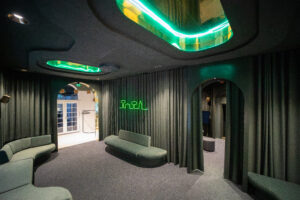
Custom-cut peat-based acoustic panels complete the space
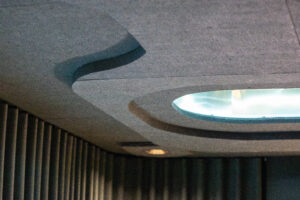
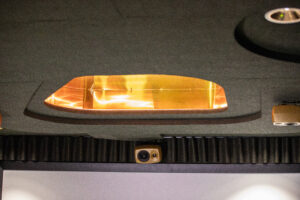
Acoustic panels manufactured by Konto Oy were installed on the museum’s ceilings; these panels are made from Finnish peat and other natural fiber-based materials. The porous structure of the panels provides excellent sound absorption and creates a calm, harmonious acoustic environment in the space. This visually striking ceiling solution honors the building’s history and highlights its new purpose.
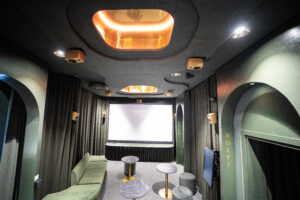
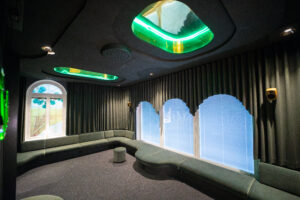

Technical Properties and Installation
The Konto acoustic panels used in this project are lightweight, dimensionally accurate, and eco-friendly. Their peat-based material naturally offers effective absorption, particularly in the speech range, which improves the clarity and comfort of the space.
Technical solutions:
- Material: peat-based natural fiber panel
- Elements cut to shape according to project specifications
- Excellent sound absorption
- Suitable for public spaces and museum environments
Installation: The acoustic panels were attached to the ceilings using acoustic adhesive, which allows for a clean, seamless installation that does not damage the structure. Adhesive mounting is particularly suitable for historic sites where the original surfaces are to be preserved as intact as possible.